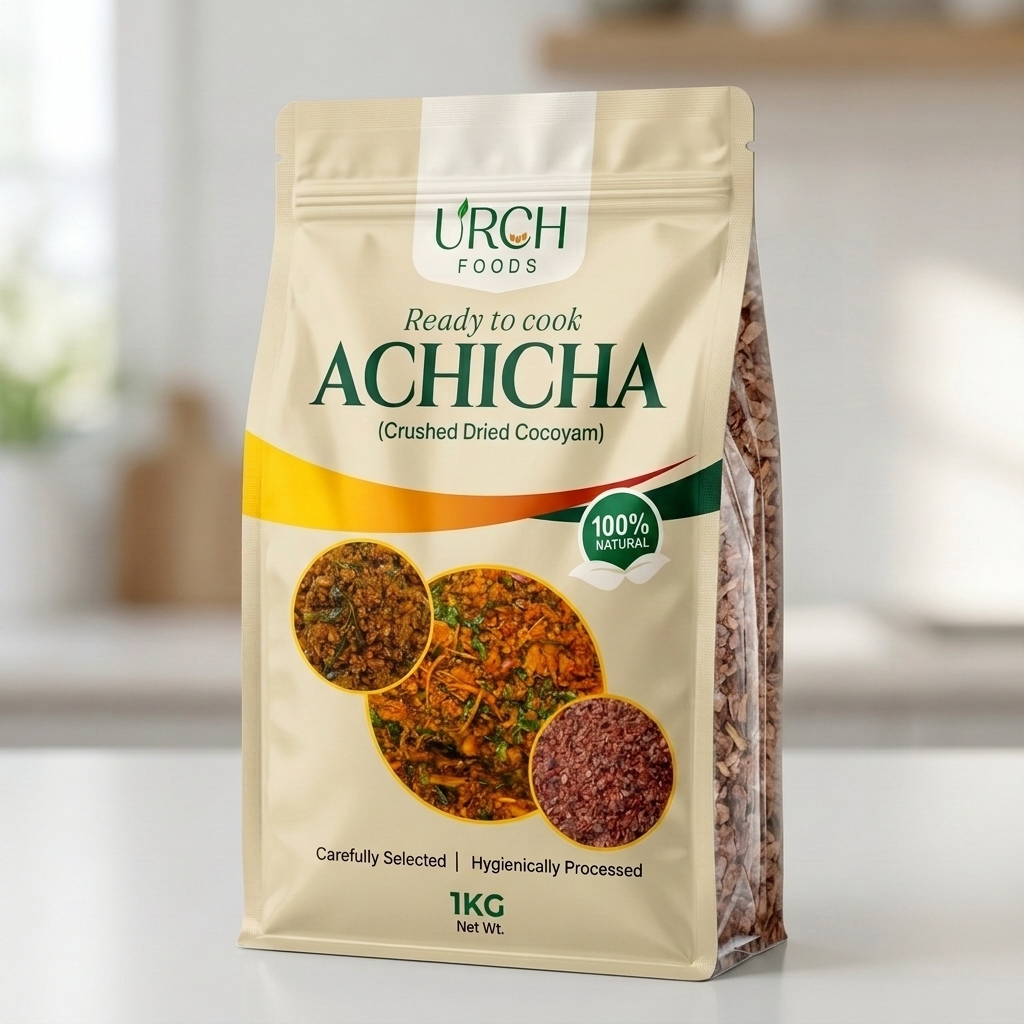
If you grew up in Enugu or have family members from that part of Nigeria, you may already know Achicha.
It is one of those traditional foods that people who grew up eating it hardly need an introduction to. But for someone hearing about it for the first time, you may be wondering what it is, what it is made from and why people enjoy it so much.
If you have been eating Achica without knowing what it is and all what not, or you are about to try it for the first time, this article explains all you need to know about Achicha ede. You'll discover what it is called in English, what it is made from, etc.
What Is Achicha Ede?
Achicha, also called Echicha, is a traditional Igbo food made from dried cocoyam. It is particularly popular in Enugu State, especially in communities such as Nsukka, Awgu, Udi and Ezeagu.
The word Ede means cocoyam in Igbo. Achicha is made by processing cocoyam, cooking it, peeling it, slicing it into smaller pieces and drying it properly.
Once dried, the cocoyam can be stored and used whenever it is needed. Before cooking, the dried flakes are soaked, rinsed and softened.
Achicha has a distinct texture and taste. It is commonly prepared with red palm oil, pepper, onions, ukpaka (African oil bean) and vegetables.
In many Enugu homes, it is also enjoyed with other traditional ingredients such as fio fio and akidi.
The Origin of Achicha in Igbo Food Culture
Achicha is one of the traditional foods associated with Enugu State, particularly communities such as Nsukka, Awgu, Udi and Ezeagu.
It is also connected to the traditional methods people used to preserve food.
Before modern food storage became common, drying was an important way to preserve farm produce. Cocoyam was cooked, peeled, sliced and spread out to dry, often during the dry Harmattan season.
This allowed families to store it for future use instead of depending entirely on fresh cocoyam.
Over time, Achicha became a familiar meal in many Igbo households. Today, people still prepare it using traditional methods, while others enjoy their own family variations.
For many people from Enugu, Achicha is one of those foods that brings back memories of home.
How Achicha Is Made
The main ingredient in Achicha is cocoyam. However, the cocoyam goes through a process before it becomes the dried flakes sold in markets.
Below is a breakdown of how Achicha or Echicha is made;
- First, the cocoyam tubers are cooked until tender. They are then peeled and sliced into smaller pieces.
- The slices are spread out to dry properly under the sun or through other suitable drying methods. Once completely dry, they become hard and can be stored for later use.
This is what gives Achicha its distinct form. It is not the same as fresh cocoyam, and it is not prepared in exactly the same way as ordinary cocoyam porridge.
When you buy dried Achicha, you are buying processed cocoyam that is ready for further preparation.
Are Achicha and Fio Fio The Same?
Achicha and fio fio are often mentioned together, especially when people talk about traditional Enugu food. However, they are two different food ingredients.
Achicha is made from cocoyam, while fio fio is made from pigeon peas, a type of legume.
Fio fio is also called agbugbu in some parts of southeastern Nigeria. It is usually sorted, washed and cooked until soft before being eaten.
Achicha, on the other hand, is made from cooked, sliced and dried cocoyam. It needs to be soaked and cooked or steamed before it is ready to eat.
Although they are different foods, they are commonly combined to prepare Achicha and fio fio. The soft cocoyam flakes and cooked pigeon peas are mixed with palm oil, pepper, onions and other ingredients to create a filling traditional meal.
Some people also add ukpaka, crayfish and vegetables to improve the taste.
It is important to understand that fio fio is not another name for Achicha. They are separate ingredients that can be prepared together.
How to Identify Good Quality Achicha Ede
Not all Achicha Ede sold in the market has the same quality. If you want to buy good Achicha, there are a few things to look out for.
- First, check the appearance. Good quality dried Achicha should have properly dried cocoyam pieces. Depending on the variety and drying method, the pieces may be light brown or darker from smoke-drying. The colour does not have to be exactly the same for every batch.
- Next, check the texture. Properly dried Achicha should be hard and dry, not wet, damp or unusually soft. The pieces should not feel sticky or show signs of moisture.
- Pay attention to the smell too. Achicha may have a natural cocoyam smell or a mild smoky smell if it was traditionally smoke-dried. It should not have a musty, rotten or mouldy smell.
- Also check for cleanliness. Good Achicha should be properly processed, with little or no unwanted dirt, stones, excessive dust or other foreign materials. Avoid any product with visible mould, insect infestation or signs of spoilage.
- Finally, pay attention to how it is packaged and stored. Achicha should be kept in a clean, dry package that protects it from moisture and pests. Once you buy yours, transfer it to an airtight container and store it in a cool, dry place.
Checking these can help you choose good quality Achicha Ede. When buying, it is also Important to purchase from a seller who can tell you where the product comes from and how it was processed.
How to Prepare Achicha the Traditional Way
Preparing Achicha starts with cleaning and softening the dried cocoyam.
If you want to cook Achicha Ede the way our ancestors used to, the old traditional way, follow the steps below;
- First, pick through the dried flakes to remove unwanted particles. Rinse them properly and soak them in clean water until they soften.
- If you are preparing Achicha with fio fio, sort and wash the pigeon peas separately. Cook them until tender. Dried pigeon peas may take some time, so allow enough cooking time.
- Drain and rinse the softened Achicha. Steam or cook it until tender.
- In another pot, heat your red palm oil without bleaching it. Add chopped onions, pepper, ukpaka, crayfish and your preferred seasonings.
- Allow the ingredients to cook together before adding the Achicha.
- Add the cooked fio fio if you are using it. Mix everything properly and finish with your preferred vegetables.
- Allow the food to simmer briefly so the ingredients combine well.
Your Achicha is ready to serve.
See other local Nigerian foods’ recipes.
Achicha and Other Traditional Igbo Meals
Achicha is part of the wide variety of traditional foods enjoyed in southeastern Nigeria.
It is often mentioned alongside foods such as akidi, fio fio, abacha and other local delicacies. Although these foods are prepared differently, they all form part of the rich food culture of the region.
Akidi, for example, is made from local beans and can be enjoyed in different combinations. Fio fio is prepared from pigeon peas, while abacha is made from cassava.
Achicha stands out because its main ingredient is dried cocoyam.
These foods also show how different communities have developed their own ways of preparing and enjoying locally available crops.
How to Store Dried Achicha Ede
One of the benefits of processing cocoyam into Achicha is that it can be stored for later use.
Because the cocoyam is dried, it does not require the same storage conditions as fresh cocoyam.
Keep your dried Achicha in a clean, dry and airtight container. Store it away from moisture and direct contact with water.
Moisture can affect the quality of dried food and encourage mould growth. Always check the product before cooking and avoid using any that shows signs of spoilage.
When stored properly, dried Achicha can remain available in your kitchen until you are ready to prepare it.
How to Get Local Nigerian Food Ingredients Anywhere in the World
Finding traditional or local Nigerian food ingredients is not always easy, especially when you live outside the communities where they are commonly sold.
You may live in Lagos, Abuja or outside Nigeria and still want to prepare the same meals you grew up eating.
URCH Foods makes it easier to discover and access traditional Nigerian food ingredients from anywhere in the world.
You can buy your local Nigerian foods and ingredients from https://urchfoods.com. Delivery to anywhere in Nigeria and abroad.
Conclusion
Achicha is a special part of Igbo food culture. From the way cocoyam is processed and preserved to the different ingredients used in preparing it, there is a lot to appreciate about this traditional meal.
Whether you enjoy it with fio fio, ukpaka, akidi or vegetables, Achicha is one of those local foods worth discovering.
If you grew up eating it, you already know the taste. And if you have never tried it, now you know more about this traditional Enugu delicacy. Enjoy.